The Art of Plating Rolled Crêpes: Elevating a Classic Dish
The Art of Plating Rolled Crêpes: Elevating a Classic Dish
There’s something inherently elegant about a properly rolled crêpe. Unlike its folded or triangular cousins, the rolled crêpe presents a canvas for culinary artistry that transforms a simple dish into restaurant-worthy presentation. Whether you’re serving sweet dessert crêpes or savory dinner options, mastering the plating technique can elevate your cooking from homestyle to haute cuisine.
The Foundation: The Perfect Roll
Before we discuss plating, the roll itself matters. A well-executed crêpe roll should be tight enough to hold its shape but not so compressed that the filling oozes out. The seam should face downward on the plate, presenting a smooth, unbroken surface to your guests. For filled crêpes, aim for a diameter of about one to one-and-a-half inches when rolled.
Classic Single Roll Presentation
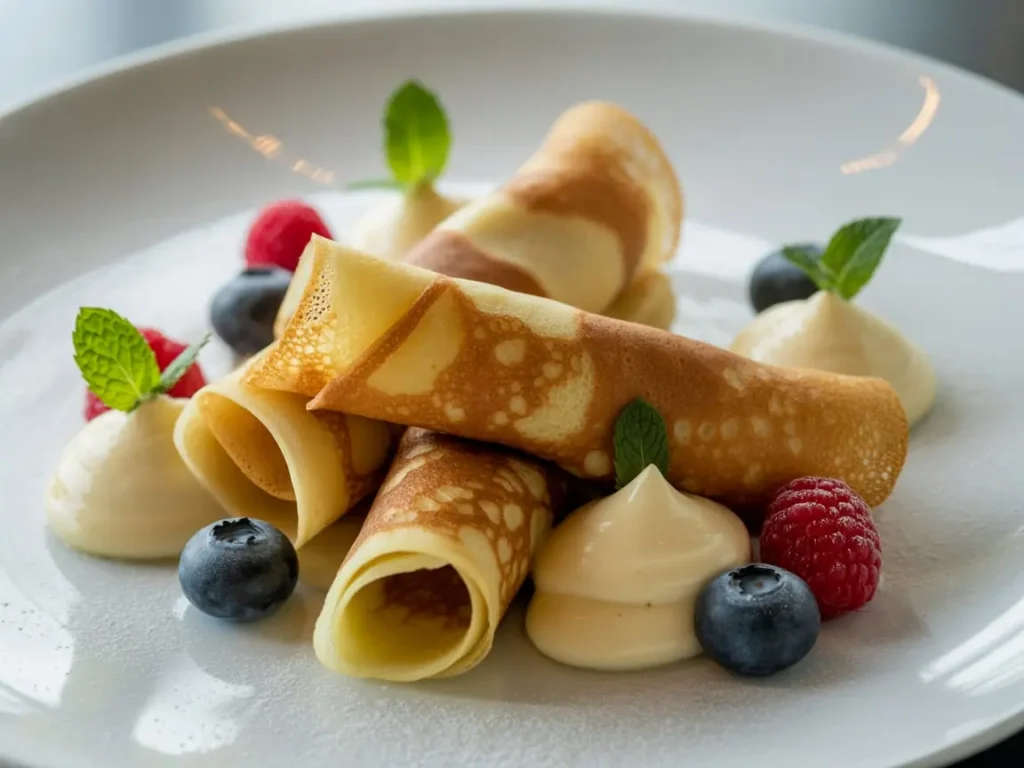
The simplest approach is often the most sophisticated. Place a single rolled crêpe slightly off-center on the plate, angled at roughly 30 degrees. This diagonal positioning creates visual interest and suggests movement. Dust the crêpe lightly with powdered sugar for sweet versions, or finish with fresh herbs for savory preparations. A small garnish—perhaps a mint sprig for dessert crêpes or microgreens for savory—placed at one end provides a focal point without overwhelming the dish.
The Triple Stack
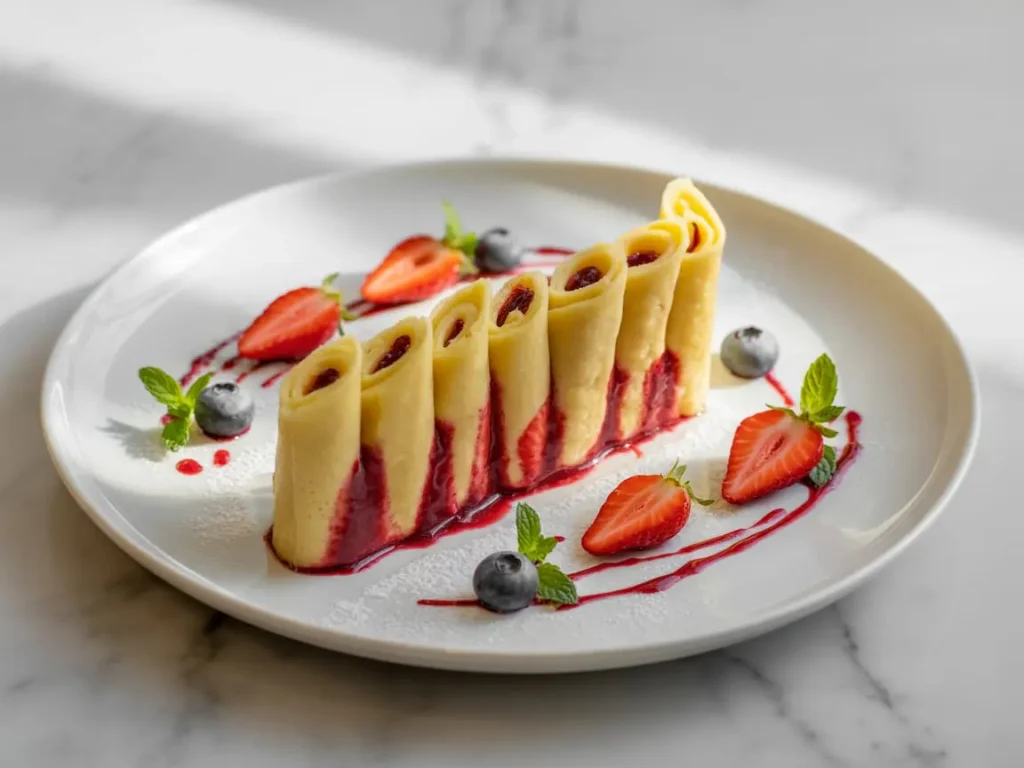
For heartier portions, consider the triple stack method. Arrange three rolled crêpes parallel to each other, either touching or with minimal space between them. This works particularly well for brunch service. The key is ensuring all three rolls are identical in size and tightness. Drizzle sauce across the trio in a gentle zigzag pattern, and finish with a small mound of whipped cream or crème fraîche positioned to one side.
Sauce Application Techniques
Sauce can make or break your plating. Avoid simply pouring it over the crêpe, which can make the dish look heavy and unrefined. Instead, try these approaches:
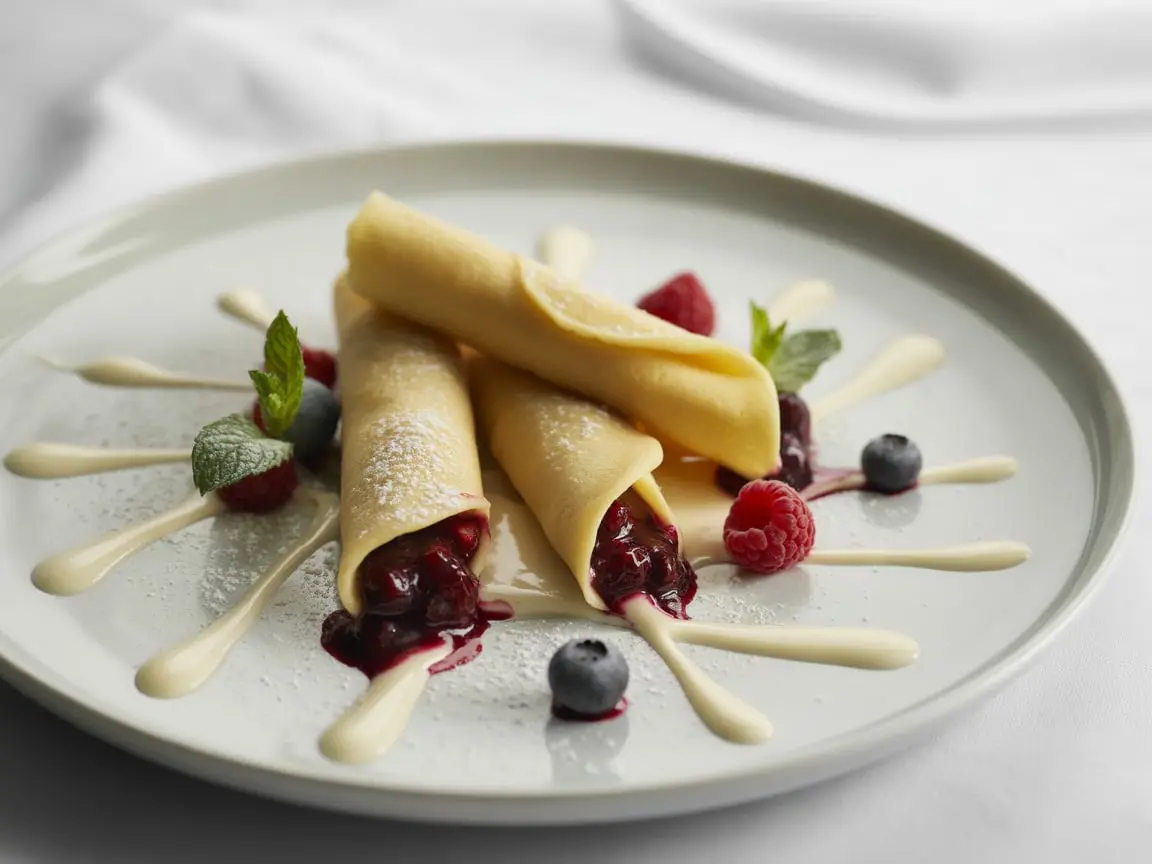
The Pool Method: Spoon a small pool of sauce onto the plate first, then nestle your rolled crêpe partially into it. This prevents the crêpe from becoming soggy while adding visual appeal.
The Drizzle: Use a squeeze bottle or spoon to create thin, deliberate lines of sauce across the crêpe. Cross-hatching or parallel lines both work beautifully.
The Accent: Place small dots or quenelles of sauce strategically around the plate rather than directly on the crêpe itself.
Sweet Crêpe Flourishes
For dessert crêpes, consider these finishing touches. Fresh berries can be scattered artfully—odd numbers tend to look more natural than even groupings. A small scoop of ice cream or sorbet placed adjacent to the crêpe adds temperature contrast and visual interest. Toasted nuts provide textural contrast and can be sprinkled sparingly across the composition.
Chocolate or caramel sauce works wonderfully when applied with restraint. Consider creating a thin line of sauce on the plate, then using a toothpick to drag perpendicular lines through it, creating an elegant feathered effect.
Savory Sophistication
Savory rolled crêpes benefit from thoughtful garnishing as well. A small salad of dressed greens placed beside the crêpe adds color and freshness. Shaved Parmesan, crispy prosciutto shards, or toasted breadcrumbs provide textural elements that photograph beautifully and add complexity to each bite.
For vegetable-filled crêpes, consider reserving some of the filling ingredients to scatter around the plate. This gives diners a preview of what’s inside while adding visual interest.
The Color Principle
Regardless of what type of crêpe you’re plating, remember that contrast matters. The pale golden-brown of the crêpe needs complementary colors to truly shine. Deep greens, vibrant reds from berries or tomatoes, the stark white of cream or cheese—these contrasts make the dish come alive visually.
Final Thoughts
The beauty of plating rolled crêpes lies in restraint. Unlike some modern plating techniques that pile elements high or crowd the plate with components, crêpes are best served with breathing room. Use a plate larger than you think you need. Allow negative space to frame your creation. Remember that sometimes the most sophisticated presentations are also the simplest.
With practice, plating rolled crêpes becomes intuitive. You’ll develop your own style and signature touches. The key is to approach each plate as a small work of art—one that honors the care you put into making the crêpes themselves.