Classic Pasta Recipes: From Simple to Spectacular
Classic Pasta Recipes: From Simple to Spectacular
Pasta is one of the most versatile and beloved foods in the world. Whether you’re looking for a quick weeknight dinner or an impressive dish for guests, these classic pasta recipes offer something for every occasion and skill level.
Cacio e Pepe: Roman Simplicity
This iconic Roman pasta showcases how just three ingredients can create something extraordinary. The name translates to “cheese and pepper,” and that’s essentially what you get, elevated through proper technique.
Cook spaghetti in well-salted water until just shy of al dente. Meanwhile, toast whole black peppercorns in a dry pan until fragrant, then coarsely grind them. Reserve a full cup of pasta water before draining. In a large bowl, combine the hot pasta with the pepper and begin adding finely grated Pecorino Romano cheese gradually while tossing constantly. Add pasta water bit by bit to create a silky, creamy sauce that coats each strand. The key is maintaining the right temperature so the cheese melts into a sauce rather than clumping. Serve immediately with extra cheese and pepper.
Aglio e Olio: The Midnight Classic
When your pantry is bare but you need something satisfying, this garlic and oil pasta comes to the rescue. It’s a staple of Italian cucina povera, or peasant cooking, proving that limitation breeds creativity.
Bring a large pot of salted water to boil and cook spaghetti. While it cooks, gently warm a generous amount of olive oil in a large skillet and add thinly sliced garlic. Cook slowly over low heat until the garlic turns golden and fragrant but not brown, which would make it bitter. Add red pepper flakes to taste. When the pasta is nearly done, transfer it directly to the oil with tongs, bringing some pasta water along. Toss everything together, adding more pasta water as needed to create a light sauce. Finish with chopped fresh parsley and serve with freshly grated Parmesan if desired.
Carbonara: Eggs, Cheese, and Pork Perfection
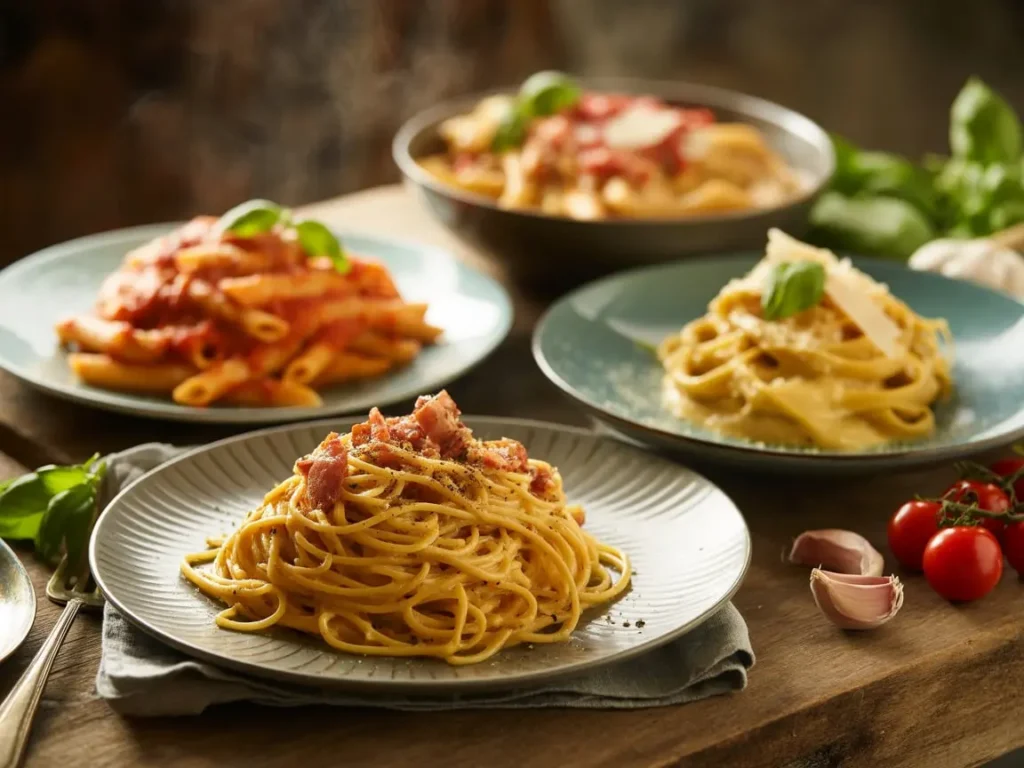
Despite popular misconceptions, authentic carbonara contains no cream. This Roman dish relies on eggs, cheese, and pasta water to create its signature silky texture.
Cut guanciale or pancetta into small pieces and render it in a pan until the fat is golden and the meat is crispy. While your pasta cooks, whisk together egg yolks, whole eggs, grated Pecorino Romano, Parmigiano-Reggiano, and plenty of black pepper in a bowl. When the pasta is ready, reserve pasta water and drain. Remove the pan with the pork from heat and add the hot pasta, tossing to coat in the rendered fat. Let it cool for a moment, then add the egg mixture, tossing constantly and vigorously. Add pasta water gradually to achieve a creamy consistency. The residual heat cooks the eggs gently without scrambling them. Serve immediately with additional cheese and pepper.
Puttanesca: Bold and Briny
This robust Neapolitan sauce combines olives, capers, anchovies, and tomatoes into something greater than the sum of its parts. Legend suggests it was invented by ladies of the night who needed something quick between clients, though the true origin remains debated.
Start by warming olive oil and sautéing minced garlic and anchovy fillets until the anchovies dissolve into the oil. Add red pepper flakes, then crushed tomatoes and let the sauce simmer. Stir in halved Kalamata olives, capers, and a handful of chopped fresh parsley. Let everything meld together for about fifteen minutes. Toss with your cooked pasta of choice, spaghetti or linguine work particularly well. The sauce should be punchy and full-flavored, with each component contributing its own character.
Bolognese: The Patient Cook’s Reward
True Bolognese ragù bears little resemblance to the ground beef and tomato sauce many know. This is a meat sauce that requires time and patience, simmering gently for hours until rich and complex.
Begin with finely diced onion, carrot, and celery, the classic soffritto base. Cook these slowly in butter and olive oil until completely soft. Add ground beef, pork, and veal if available, breaking it up and browning it thoroughly. Deglaze with white wine and let it cook off. Add tomato paste, a small amount of crushed tomatoes or tomato sauce, milk, and a good grating of nutmeg. The sauce should simmer very gently for at least three hours, with beef broth added periodically to keep it moist but not soupy. The final result should be thick, with the meat having almost dissolved into silky tenderness. Serve with fresh tagliatelle or pappardelle, which hold the sauce better than round pastas. Top with freshly grated Parmigiano-Reggiano.
Pesto: Ligurian Summer in a Bowl
Traditional pesto comes from Genoa and combines fresh basil, garlic, pine nuts, Parmigiano-Reggiano, Pecorino, and olive oil into a vibrant green sauce best made with a mortar and pestle, though a food processor works in a pinch.
If using a mortar and pestle, start by pounding the garlic with coarse salt until it forms a paste. Add pine nuts and crush them, then gradually work in basil leaves with a circular grinding motion. Once you have a paste, gradually incorporate the grated cheeses, then slowly stream in olive oil until you achieve a thick but pourable consistency. For a food processor, pulse the garlic and pine nuts first, add basil and pulse until chopped, then add cheese and stream in oil with the motor running. Don’t over-process or the heat will darken the basil. Toss with hot pasta and a splash of pasta water to help it coat evenly. Traditionally served with trofie, linguine, or trenette, sometimes with green beans and potatoes added to the pasta pot.
Amatriciana: A Spicy Roman Standard
This tomato-based sauce from the town of Amatrice features guanciale, tomatoes, Pecorino Romano, and a kick of chili pepper. It’s similar to carbonara’s flavor profile but with tomatoes taking center stage.
Render cubed guanciale until golden, then remove it from the pan. In the rendered fat, add red pepper flakes and white wine, letting it reduce. Add crushed tomatoes and the cooked guanciale back to the pan. Simmer until the sauce thickens slightly. Toss with bucatini or rigatoni, which catch the sauce beautifully in their hollows. Finish with a generous handful of grated Pecorino Romano. The balance between the pork’s richness, the tomatoes’ acidity, and the cheese’s sharpness makes this endlessly craveable.
Tips for Pasta Success
The difference between good pasta and great pasta often comes down to technique. Always use plenty of water and salt it generously until it tastes like the sea. This is your only chance to season the pasta itself. Cook pasta until al dente, with a slight bite, as it will continue cooking when combined with sauce. Reserve at least a cup of pasta water before draining, this starchy liquid is crucial for creating cohesive sauces. When finishing pasta in the pan with sauce, the pasta should still be slightly undercooked, it will absorb flavor and finish cooking in the sauce. Finally, pasta and sauce should be married together in the pan, not simply topped at serving. This allows the pasta to absorb the sauce and creates a unified dish rather than two separate components.
With these classic recipes in your repertoire, you’ll be equipped to create authentic Italian pasta dishes that satisfy any craving, from the simplest midnight snack to an impressive dinner party centerpiece.